The Google Core Update 2026, particularly the March rollout, has once again reshaped the SEO landscape. If you’ve noticed sudden ranking fluctuations or traffic changes, you’re not alone. Nearly 80% of top-ranking results shifted positions, making this one of the most volatile updates in recent years.
But what exactly changed—and more importantly, how should you adapt your SEO strategy? Let’s break it down in a practical, easy-to-understand way.
What Is a Google Core Update?
A core update is a broad change to Google’s search algorithms designed to improve the quality and relevance of search results. Unlike penalties, these updates don’t target specific websites—they reassess content across the entire web.
Think of it like Google updating its “best answers” list based on new, better, or more relevant content.
The March 2026 Core Update rolled out between March 27 and April 8, 2026, and aimed to surface more helpful, satisfying content for users.
Key Highlights of the 2026 Core Update
1. Massive Ranking Volatility
This update caused extreme SERP fluctuations:
- Around 79.5% of the top 3 results changed positions
- Over 24% of the top 10 pages dropped out of the top 100
This means rankings are now more competitive and less stable than before.
2. Shift Toward Authority & Trusted Sources
Google is clearly favoring:
- Established brands
- Official websites
- Niche experts
- Authoritative platforms
Thin affiliate sites and generic blogs are losing visibility.
3. Stronger Focus on E-E-A-T
E-E-A-T (Experience, Expertise, Authoritativeness, Trustworthiness) is no longer optional.
The update emphasized the following:
- Real author credentials
- Proven expertise
- Trust signals (reviews, citations, transparency)
Anonymous or low-credibility content is being pushed down.
4. Crackdown on Low-Quality AI Content
Google is getting smarter at detecting the following:
- Mass-produced AI content
- Generic, repetitive articles
- Content without original insights
High-quality AI-assisted content is still okay—but purely automated content is risky.
5. Content Quality Over Optimisation Tricks
Google continues moving away from the following:
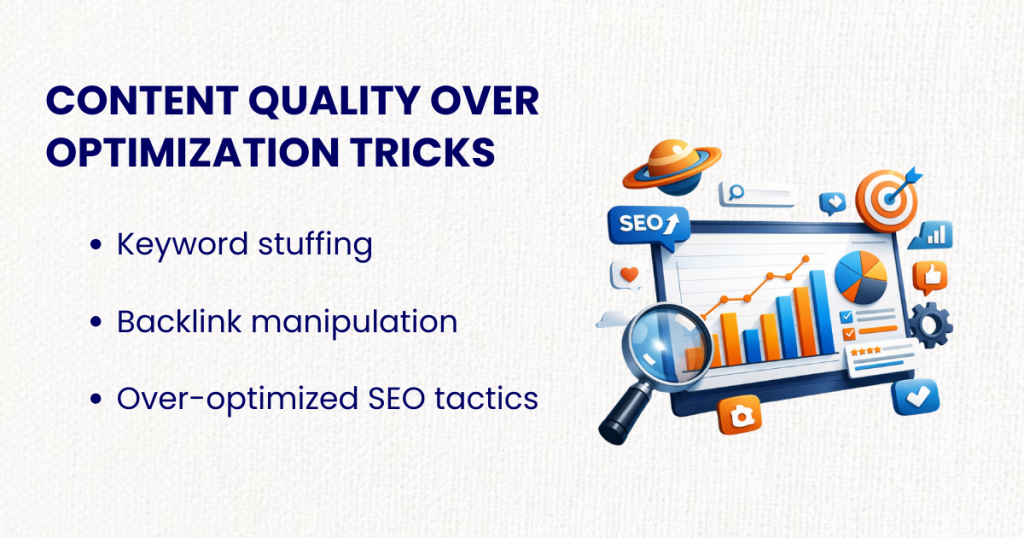
- Keyword stuffing
- Backlink manipulation
- Over-optimised SEO tactics
Instead, it rewards:
- Depth
- Relevance
- User satisfaction
Who Won and Who Lost?
Winners:
- Brands with strong authority
- Websites with niche expertise
- Content with real-life experience
- High-quality informational pages
Losers:
- AI content farms
- Thin affiliate sites
- Sites with weak credibility
- Over-optimised SEO pages
The message is clear: quality beats quantity every time.
What It Means for Your SEO Strategy
Now let’s get to the most important part—what YOU should do.
1. Focus on “People-First” Content
Google’s goal hasn’t changed: to serve users the best answers.
Ask yourself:
- Does my content actually solve a problem?
- Is it better than competitors?
- Would I trust this as a reader?
If the answer is “no,” rankings will drop.
2. Build Topical Authority (Not Random Blogs)
Instead of writing on everything:
- Focus on one niche
- Create in-depth content clusters
- Cover topics completely
Google now rewards topic experts, not generalists.
3. Improve Content Depth & Originality
Avoid:
- Rewriting existing content
- Surface-level blogs
Instead:
- Add case studies
- Include personal experience
- Share unique insights
Original content = higher rankings.
4. Strengthen E-E-A-T Signals
Do this immediately:
- Add author bios
- Show credentials
- Include contact/about pages
- Display trust signals (reviews, testimonials)
Trust is now a ranking factor.
5. Audit and Update Old Content
Core updates often hit outdated content.
Steps:
- Identify declining pages
- Update information
- Improve structure
- Add new data or examples
Content freshness matters more than ever.
6. Avoid Over-Reliance on AI
AI is a tool—not a strategy.
Best practice:
- Use AI for drafts
- Add human editing
- Inject expertise
Google rewards human value, not automation.
7. Improve Technical SEO & UX
Even great content needs:
- Fast loading speed
- Mobile optimization
- Clean UI
- Good Core Web Vitals
Poor user experience can hurt rankings.
8. Be Patient with Recovery
If your site was affected:
- Don’t panic
- Don’t make sudden, drastic changes
Recovery usually takes:
- 2–6 months
- Often requires the next core update cycle
SEO is a long-term game.
Practical SEO Checklist for 2026
✔ Write helpful, original content
✔ Focus on niche authority
✔ Show real expertise
✔ Avoid spammy SEO tactics
✔ Improve UX and speed
✔ Update old content regularly
✔ Use AI responsibly
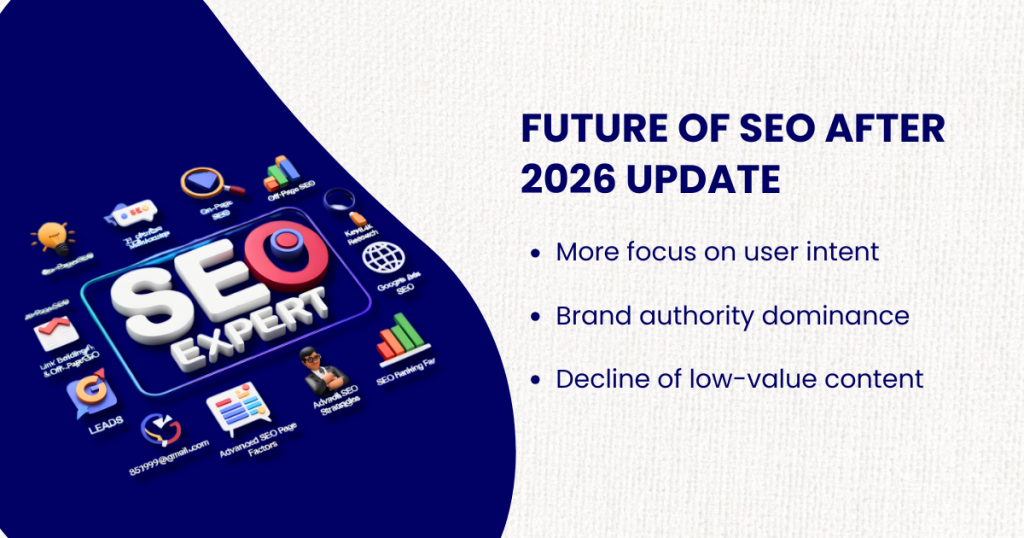
Future of SEO After 2026 Update
This update confirms a major trend:
Google is evolving from a search engine to an answer engine
Key future trends:
- AI-powered search results
- More focus on user intent
- Brand authority dominance
- Decline of low-value content
Conclusion
The Google Core Update 2026 is not just another update—it’s a strong signal about the future of SEO.
If you’re still relying on:
- Keyword stuffing
- Low-quality blogs
- AI-generated bulk content